Electric vehicles are becoming more common on Australian roads, and many drivers are asking the same question: Can you tow with an electric car?
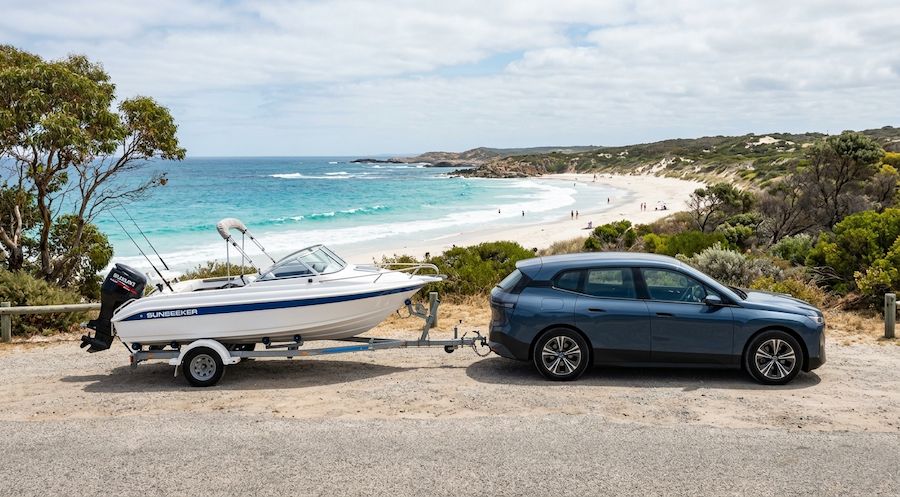
The short answer is yes, many EVs can tow trailers, caravans, and boats. However, EV towing in Australia depends on the vehicle model and manufacturer’s towing rating, and some EVs are not approved for towing at all.
Towing with an EV can also affect driving range and charging logistics, especially when towing heavier trailers. This guide explains how EV towing works, the limits drivers should check, and what to know before towing with an EV.
EV Towing Explained
- Many electric vehicles can tow trailers, caravans, or boats, but towing limits vary by model.
- Some EVs are not approved for towing, even if a towbar can be installed.
- Typical EV towing capacity ranges from around 750 kg to 2,500 kg.
- Towing can reduce EV driving range by 30–50% or more.
- Charging infrastructure can create challenges when towing long distances.
- EVs provide instant torque and smooth power delivery, which can help when pulling a load.
- Drivers should always check the vehicle’s official towing capacity and tow ball limits before towing.
Can Electric Vehicles Tow?
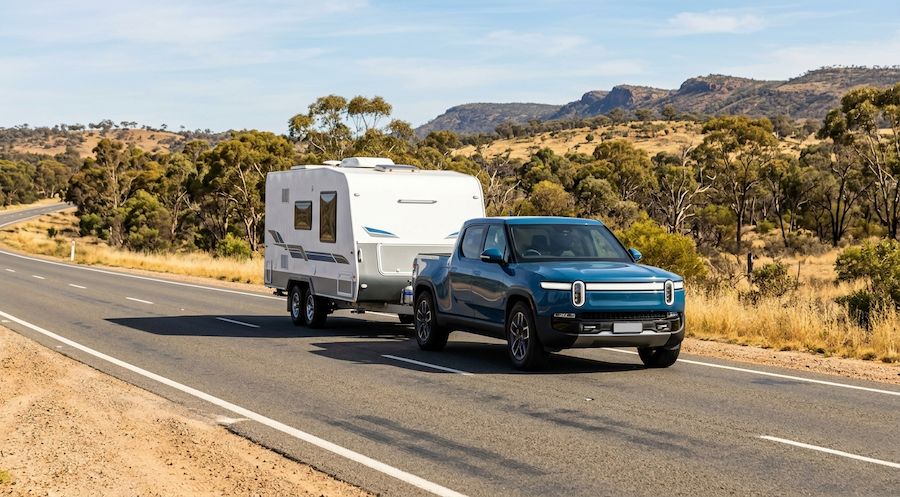
Many modern EVs are designed to tow small trailers, boats, or caravans. However, towing ability depends entirely on the design and engineering of the electric vehicle.
Some EV manufacturers include official towing ratings, while others do not approve towing at all. Even if a towbar can physically be installed, it does not mean the vehicle is rated to tow.
Before towing with an EV, drivers should confirm the following:
- maximum towing capacity
- manufacturer approval for towing
- tow ball weight limit
- vehicle load limits.
Towing with an EV (that is not rated to tow) can place stress on the electric drivetrain and cooling systems. In some cases, it may also affect the manufacturer’s warranty.
For this reason, checking the vehicle handbook or manufacturer specifications is always the safest approach before attempting EV towing.
Typical EV Towing Capacity
The towing capacity of electric vehicles varies widely depending on the vehicle’s size and design.
Smaller EVs generally have lower towing limits, while larger electric SUVs are increasingly being designed with towing in mind.
Across the market, towing capacity typically ranges between 750 kg and 2,500 kg, although this varies between models.
To put this into perspective, many diesel utes commonly used for towing in Australia are rated for up to 3,500 kg.
Below is a general comparison of typical towing capacities.
| Vehicle Type | Typical Towing Capacity |
|---|---|
| Small electric car | Around 750 kg |
| Mid-size electric SUV | 1,000–1,800 kg |
| Larger electric SUV | Up to 2,500 kg |
| Diesel ute (comparison) | Up to 3,500 kg |
While EV towing limits are improving quickly, traditional diesel towing vehicles still lead the market when it comes to maximum trailer weight.
However, many new electric SUVs entering the Australian market are closing this gap as battery capacity and vehicle design continue to improve.
Tesla Cybertruck vs Other Electric Vehicles for Towing
The Tesla Cybertruck has attracted significant attention because it offers one of the highest towing capacities of any electric vehicle currently available.
While many electric SUVs are designed to tow smaller trailers or boats, the Cybertruck was built with heavy-duty towing in mind. This makes it one of the closest EV alternatives to traditional diesel utes commonly used for towing in Australia.
However, towing ability still varies significantly across different EV models. Many electric vehicles prioritise efficiency and urban driving rather than heavy towing.
The table below compares the Cybertruck with several other electric vehicles that offer towing capability.
| Electric Vehicle | Typical Towing Capacity | Vehicle Type |
|---|---|---|
| Tesla Cybertruck | Up to 4,990 kg | Electric ute |
| Tesla Model X | Up to 2,250 kg | Large electric SUV |
| Kia EV9 | Up to 2,500 kg | Large electric SUV |
| Ford F-150 Lightning | Up to 4,500 kg | Electric pickup truck |
| Hyundai IONIQ 5 | Up to 1,600 kg | Mid-size electric SUV |
The Cybertruck stands out because its towing capacity is closer to heavy-duty diesel utes, which are typically rated for up to 3,500 kg in Australia.
This higher rating makes vehicles like the Cybertruck and Ford F-150 Lightning more suitable for towing larger caravans, work trailers, and heavier loads.
Check out how the Tesla Cybertruck dominates other high-powered vehicles in terms of towing power:
EV Towing Compared With Petrol and Diesel Vehicles
Electric vehicles are becoming more capable each year, but when it comes to towing, traditional petrol and diesel vehicles still hold an advantage in some areas.
Many diesel utes commonly used for caravans or work trailers are rated to tow up to 3,500 kg. This higher towing capacity has made them the standard choice for heavy towing in Australia for many years.
By comparison, most EV towing capacities currently range between 750 kg and 2,500 kg, depending on the model. Larger electric SUVs tend to offer higher towing limits, while smaller electric vehicles often have lower ratings or are not designed to tow at all.
Despite this difference, electric vehicles do offer some performance benefits when towing.
Electric motors produce instant torque, which means the vehicle can deliver strong pulling power from a standstill. This smooth power delivery can make towing feel controlled, especially when accelerating or climbing hills.
However, the biggest difference between traditional towing vehicles and towing with an EV is not towing power. The main difference is energy consumption and driving range.
How Towing Affects EV Driving Range
One of the most important things drivers should understand about EV towing is how much it can affect driving range.
When an electric vehicle is towing a trailer, caravan, or boat, the battery must work harder to move the additional weight. The extra load also increases aerodynamic drag, particularly with taller trailers such as caravans.
Because of this, towing can significantly increase electricity consumption.
In many real-world situations, drivers may see range reductions of around 30–50 per cent when towing. In some cases, energy consumption can nearly double, depending on the trailer weight and driving conditions.
For example, an EV that normally travels around 400 kilometres on a full charge may only achieve around 200 to 250 kilometres when towing a caravan or heavy trailer.
This reduced range does not mean EV towing is impractical. However, it does mean that planning the trip becomes much more important, particularly when travelling long distances. Being familiar with how towing affects range can save you the stress of range anxiety.
Drivers towing with an EV may need to plan additional charging stops and allow more time for travel.
Factors That Affect EV Range When Towing
Several factors influence how much range is reduced when towing with an EV.
- trailer weight
- trailer aerodynamics and height
- driving speed
- road gradients and hills
- weather conditions such as wind.
Heavier trailers and high speeds will generally increase energy consumption more quickly. Large caravans can also create significant wind resistance, which further reduces driving range.
Because of these variables, two drivers towing similar trailers may experience very different results depending on their route and driving style.
For drivers considering EV towing, understanding how these factors affect range can help prevent unexpected charging stops or reduced travel distances.
Charging Challenges When Towing
One of the practical issues EV drivers face is charging access while towing a trailer or caravan.
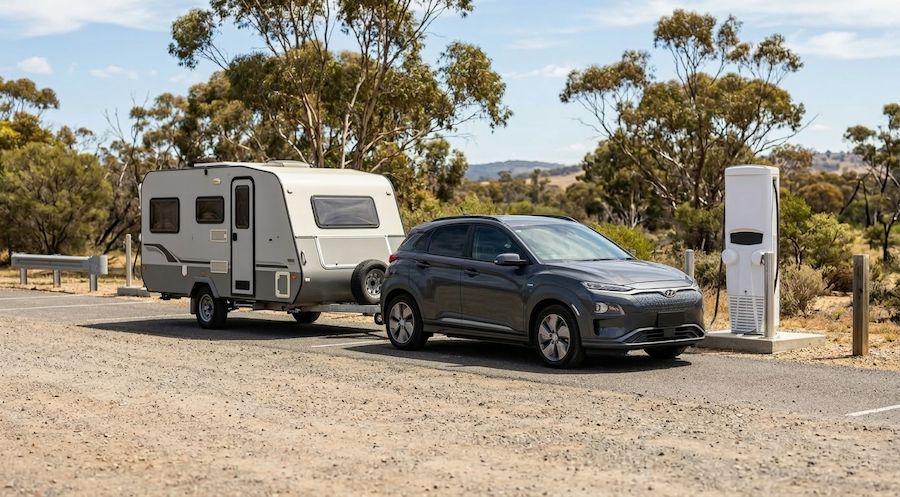
Most public EV charging stations were originally designed for standard vehicles, not vehicles towing trailers. Because of this, many charging bays do not provide enough space for a vehicle and trailer combination.
Drivers often need to unhitch the trailer before charging so the vehicle can fit into the charging bay. This adds extra time and effort during long trips.
Charging also takes longer than refuelling a petrol or diesel vehicle. While fast chargers can add significant range in a short period, charging still requires more planning when compared with traditional towing vehicles.
For drivers planning long trips towing with an EV, route planning becomes important. Identifying charging locations ahead of time can help avoid unnecessary delays.
Improvements in EV Charging Infrastructure
Charging networks across Australia are expanding quickly, and infrastructure is gradually improving to support EV towing. The NSW government is investing $209 million to create a widely accessible, world-class electric vehicle charging infrastructure.
As EV adoption increases, more charging providers are expected to design stations that are easier for drivers towing caravans or trailers to use.
Over time, these improvements will make EV towing in Australia more convenient, particularly for long-distance travel.
Advantages of Towing With an Electric Vehicle
Despite the challenges around range and charging, electric vehicles offer several advantages when it comes to towing.
Electric motors provide strong pulling power from the moment the accelerator is pressed. This instant torque can help when moving a trailer from a standstill or climbing steep hills.
- Smooth acceleration without gear changes
- Strong pulling power at low speeds
- Quiet operation compared with diesel towing vehicles
- Consistent power delivery when climbing hills
- Regenerative braking that can assist with downhill speed control.
These characteristics can make towing with an EV feel stable and controlled in many driving conditions.
While electric vehicles may still have lower towing limits than some diesel vehicles, their drivetrain design can provide a comfortable and predictable towing experience for many drivers.
Safety Checks Before Towing With an EV
Before attempting EV towing, it is important to confirm that your vehicle is designed and rated to tow the load you plan to attach.
Just like petrol or diesel vehicles, electric vehicles have specific limits that should never be exceeded. These limits are designed to protect the vehicle’s structure, braking system, and drivetrain.
- maximum towing capacity
- tow ball weight limit
- gross vehicle mass (GVM)
- gross combined mass (GCM)
- towbar rating and compatibility
- trailer load balance.
Exceeding any of these limits can affect vehicle handling and braking performance. Overloading may also increase strain on the vehicle’s battery system and electric drivetrain. Australian vehicle towing regulations limits are designed to protect the structure, braking system, and drivetrain of the electric vehicle.
It is also important to remember that towing a trailer increases stopping distance. Drivers should allow extra braking space and maintain safe speeds when towing.
If you are unsure whether your electric vehicle is suitable for towing, the safest approach is to check the manufacturer’s specifications or speak with a qualified professional before towing.
The Future of EV Towing in Australia
Electric vehicle technology is improving rapidly, and EV towing in Australia is expected to become more practical as new models enter the market.
Many manufacturers are now developing electric SUVs and electric utes with higher towing capacities designed for caravans and work trailers.
Larger battery packs and more efficient electric drivetrains are helping increase both towing capacity and driving range. As battery technology improves, EVs will be able to travel further even when towing heavier loads.
Charging infrastructure is also expanding across Australia. As more charging locations are built along major highways and regional routes, long-distance travel towing with an EV will become easier.
Over time, these improvements are likely to make EV towing a more convenient option for Australian drivers.
Commercial Fleets Are Already Using Electric Trucks
Electric vehicle technology is not only being adopted by private drivers. Major Australian transport companies are already investing in electric trucks for commercial operations.
For example, logistics company Team Global Express has introduced an electric vehicle fleet in Western Sydney as part of its transition toward lower-emission transport.
The company has deployed electric trucks and delivery vehicles to support urban freight operations. These vehicles are designed to handle regular delivery routes while reducing emissions and improving energy efficiency.
This investment highlights how electric vehicle technology is becoming capable of supporting commercial transport tasks that were traditionally handled by diesel vehicles.
As more transport operators introduce electric trucks into their fleets, improvements in battery capacity, vehicle design, and charging infrastructure are expected to continue. These developments are likely to make electric vehicles even more capable of towing trailers and transporting heavy loads in the future.
What to Remember Before Towing with Your EV
Electric vehicles are fully capable of towing trailers, caravans, and boats, but the experience can be different from towing with petrol or diesel vehicles. EV towing depends on the vehicle model, manufacturer towing limits, and how the vehicle is used.
Towing with an EV can significantly reduce driving range, which means drivers need to plan charging stops carefully when travelling longer distances. Understanding your vehicle’s towing capacity and limits is essential before attaching a trailer.
If you find yourself stranded while towing or your vehicle stops operating, professional assistance can help get you moving again safely.
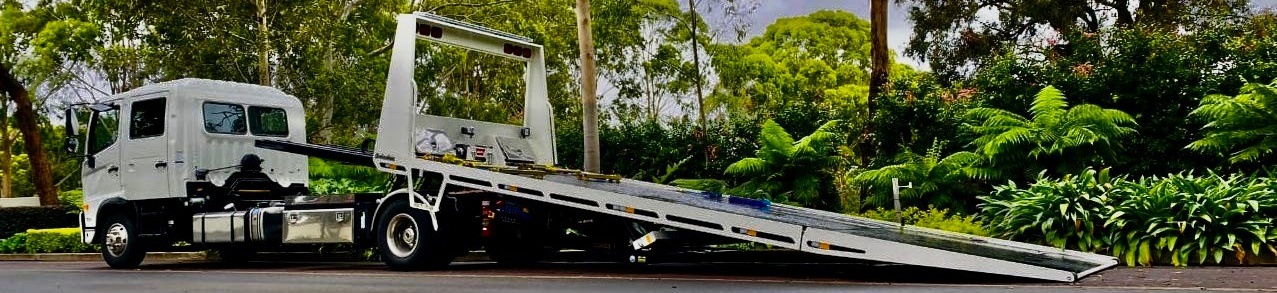
At Fast Melbourne Towing, our experienced operators provide fast and reliable assistance across Melbourne and surrounding suburbs. Our modern tilt tray tow trucks are designed to safely transport electric vehicles without road contact, ensuring your vehicle is handled with care. Call Fast Melbourne Towing for prompt, professional help whenever you need it.