Knowing how to check brake pads is something every driver should be able to do. Brake pads gradually wear down as they create friction to slow your vehicle, and checking them regularly helps ensure your car remains safe and roadworthy.
You can usually check brake pads by looking through the wheel spokes and inspecting the thickness of the brake pad material against the brake disc. If the friction material appears thinner than about 3mm, the pads should be inspected and replaced by a mechanic.
This guide explains how to check brake pads safely, how to check if brake pads are worn, and when they should be replaced to keep your braking system working properly.
Brake Pad Check Short List
- You can often check brake pads visually through the wheel spokes.
- Brake pads should usually be replaced when the friction material reaches around 3mm in thickness.
- Squealing, grinding noises, or vibrations when braking may indicate worn pads.
- Most brake pads last between 30,000 and 70,000 kilometres, depending on driving conditions.
- If braking performance changes suddenly, the braking system should be inspected immediately.
- Regular brake inspections help prevent dangerous braking problems and keep your vehicle safe on the road.
What Are Brake Pads?
Brake pads are flat friction components that press against your vehicle’s brake discs (also called rotors) when you apply the brake pedal.
When you press the brakes, hydraulic pressure forces the brake pads against the spinning discs. The friction created between these surfaces slows the wheels and brings the vehicle to a stop.
Brake pads are typically made from ceramic, metallic, or organic friction materials designed to handle high temperatures and repeated braking.
Because brake pads create friction every time you stop, they slowly wear down over time and must eventually be replaced.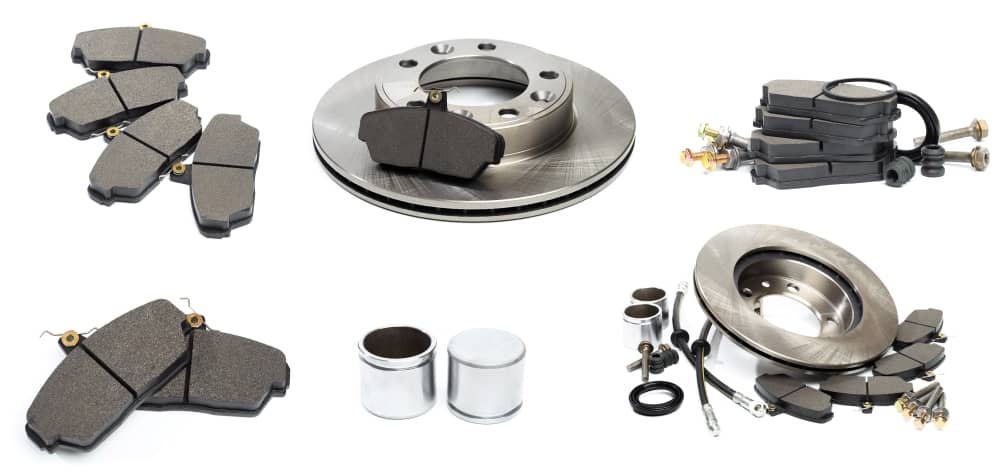
Types of Brake Pads
Brake pads are manufactured using different friction materials, each designed for specific driving conditions and vehicle types. The most common types include organic, semi-metallic, and ceramic brake pads.
Organic Brake Pads
Organic brake pads are made from materials such as rubber, carbon compounds, glass, and resins. They are typically quieter and produce less brake dust than other pad types.
These pads are commonly used in smaller passenger vehicles because they provide smooth braking performance for everyday driving. However, they tend to wear faster and may not perform as well under heavy braking or high temperatures.
Semi-Metallic Brake Pads
Semi-metallic brake pads contain a mixture of metal fibres such as steel, iron, or copper combined with friction modifiers. This construction allows them to handle higher temperatures and heavier braking loads.
Because of their durability and strong stopping power, semi-metallic pads are commonly used in larger vehicles, including trucks, SUVs, and tow trucks that regularly carry heavy loads or tow vehicles.
Ceramic Brake Pads
Ceramic brake pads are made from dense ceramic materials combined with fine copper fibres. They are known for producing minimal brake dust, operating quietly, and maintaining stable performance across a wide range of temperatures.
Ceramic pads are commonly found in modern passenger vehicles because they provide consistent braking performance with longer pad life, although they are usually more expensive than other types.
How to Check Brake Pads
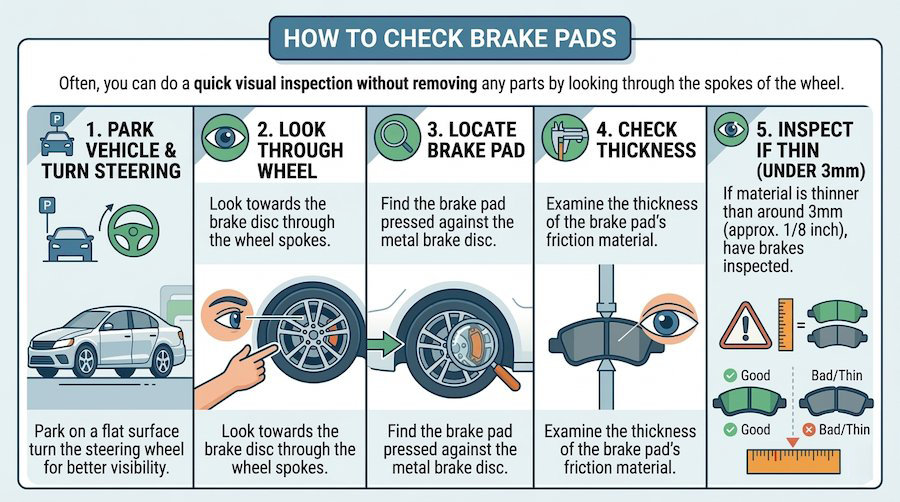
If you want to check brake pads yourself, you can often do a quick visual inspection without removing any parts. Many vehicles allow you to see the brake pads by looking through the spokes of the wheel.
- Park the vehicle on a flat surface and turn the steering wheel slightly to improve visibility.
- Look through the wheel spokes toward the brake disc.
- Locate the brake pad pressed against the metal disc.
- Check the thickness of the brake pad material.
- If the friction material appears thinner than around 3mm, it is time to have the brakes inspected.
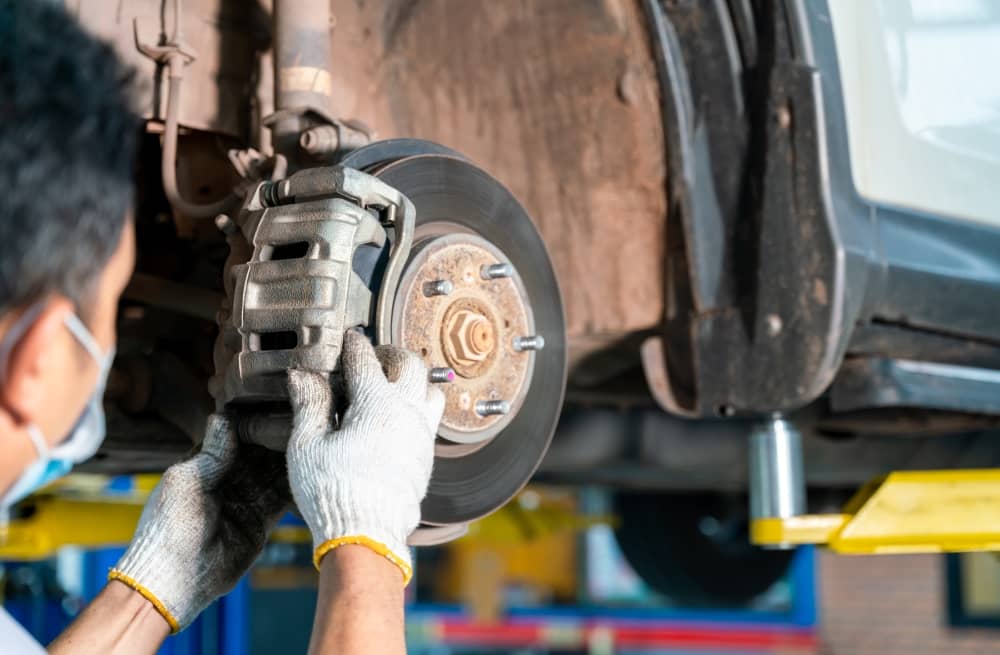
If you are unsure what you are looking for, a mechanic can remove the wheel and inspect the brake pads, discs, and callipers more closely during a routine service.
When You Cannot See Brake Pads Through the Wheels
On some vehicles, it can be difficult or impossible to see the brake pads through the wheel spokes. Wheel designs with narrow spokes, large brake callipers, or protective covers can block the view of the brake components.
In these situations, checking brake pads properly may require:
- Removing the wheel
- Inspecting both the inner and outer brake pads
-
Measuring pad thickness with a gauge
Many vehicles also wear the inner brake pad faster than the outer pad, which means a quick visual check through the wheel may not reveal the full condition of the brakes.
For this reason, brake pads are usually inspected more thoroughly during a routine vehicle service, when a mechanic can remove the wheels and check the entire braking system.
How to Check If Brake Pads Are Worn
Drivers often notice warning signs before brake pads become completely worn out. Knowing how to check if brake pads are worn can help prevent expensive brake repairs.
Common warning signs include:
- Squealing or high-pitched noises when braking
- Grinding sounds from the wheels
- Longer stopping distances
- Vibration in the brake pedal or steering wheel
- A brake warning light on the dashboard
Many brake pads also include a small wear indicator. When the pad material becomes too thin, this metal tab touches the brake disc and creates a squealing noise. This sound is designed to alert drivers that the brake pads are nearing the end of their lifespan.
If you notice any of these symptoms, you should have your braking system inspected as soon as possible. If your brakes become severely worn, take your vehicle to your nearest motor vehicle service centre to avoid further damage to your braking system.
How Often You Should Check Brake Pads
Regular inspections help detect worn brake pads before they cause more serious braking problems.
As a general guide, brake pads should be checked:
- Every 10,000 to 15,000 kilometres
- During routine vehicle servicing
-
Whenever you notice changes in braking performance
Drivers who frequently travel in heavy traffic, mountainous areas, or stop-start city driving may need to check their brakes more often because these conditions increase brake wear.
When Should Brake Pads Be Replaced?
Brake pad lifespan depends on driving conditions, driving style, and vehicle weight.
In most vehicles, brake pads last between 30,000 and 70,000 kilometres. However, frequent stop-start driving or heavy braking can cause them to wear faster.
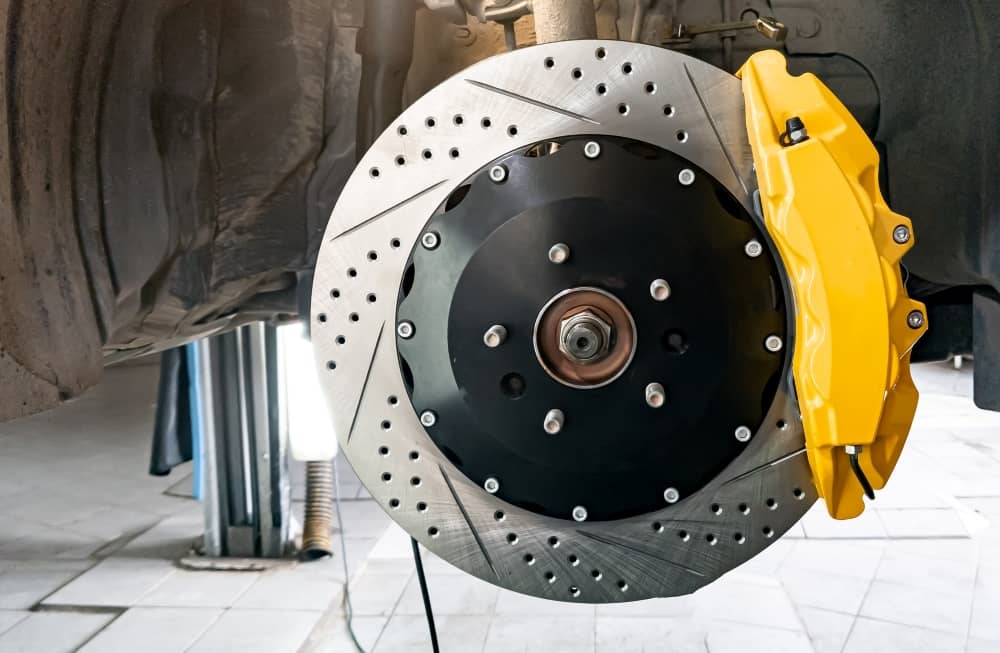
What Healthy vs Worn Brake Pads Look Like
Many drivers find it difficult to tell whether their brake pads are still safe to use. Knowing what healthy brake pads look like compared with worn ones can make visual inspections much easier. New brake pads are typically 10–12mm thick, including the friction material that presses against the brake disc.
Worn brake pads should generally be replaced when the friction material reaches around 3mm in thickness.
Replacing brake pads early helps prevent damage to brake discs, which are significantly more expensive to replace.
What Causes Brake Pads to Wear Out?
Brake pads wear down naturally due to friction. However, several factors can increase the rate of wear.
Common causes include:
- Frequent stop-start traffic
- Heavy braking
- Driving in mountainous areas
- Carrying heavy loads
- Dusty or gritty road conditions
Driving smoothly and maintaining your vehicle properly can help extend the life of your brake pads.
Front vs Rear Brake Pads
Most vehicles have brake pads on both the front and rear wheels. However, the front brakes usually handle most of the stopping force.
When braking, weight shifts toward the front of the vehicle, which causes the front brake pads to wear faster than the rear ones.
Rear brakes help maintain stability and assist with overall braking performance.
Your mechanic will check both front and rear brake pads during routine servicing.
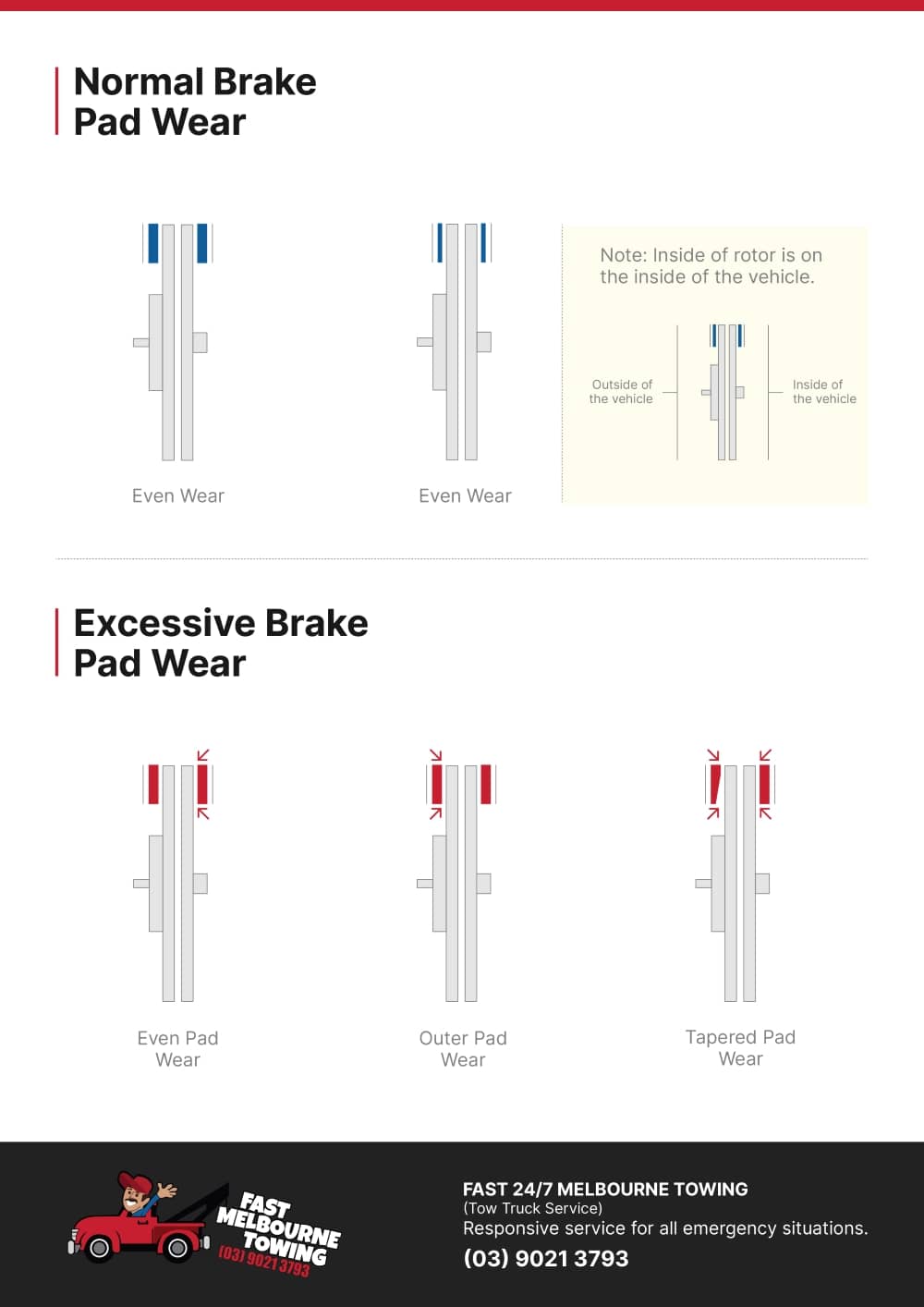
Why Inner Brake Pads Can Wear Faster
Many drivers assume that both brake pads on each wheel wear at the same rate. In reality, the inner brake pad often wears faster than the outer pad.
This happens because the brake calliper piston typically pushes the inner pad against the brake disc first. The pressure is then transferred across the disc to the outer pad.
Over time, this design can cause the inner pad to wear slightly more quickly. Because the inner pad is harder to see during a quick visual inspection, worn pads may sometimes go unnoticed.
This is another reason why professional brake inspections during regular servicing are important. Mechanics can remove the wheels and check both pads accurately.
Tips to Reduce Brake Pad Wear
You can help your brake pads last longer by improving your driving habits.
- Avoid sudden heavy braking whenever possible
- Maintain a safe following distance
- Slow down early when approaching intersections
- Keep your vehicle regularly serviced
Regular brake inspections help identify worn pads early and prevent larger braking system problems.
Can You Replace Brake Pads Yourself?
Brake pad replacement is a common mechanical repair, but it requires the correct tools and knowledge to perform safely.
If brake components are installed incorrectly, braking performance can be seriously affected. Many drivers choose to have brake pads replaced by a qualified mechanic who can also inspect the discs, callipers, and brake fluid.
A professional inspection helps ensure your entire braking system remains safe and reliable.
When You Should Not Drive With Worn Brake Pads
If you hear grinding when braking, the brake pads may already be worn down to the metal backing plate. Driving further can damage the brake discs and significantly increase the stopping distance.
In this situation, the safest option is to stop driving and have the vehicle inspected immediately.
Why Brake Maintenance Matters
Your braking system is one of the most important safety systems in your vehicle. Worn brake pads can increase stopping distances and damage other brake components.
Regular inspections and timely brake pad replacement help keep your vehicle safe and roadworthy.
If your vehicle becomes unsafe to drive due to brake problems, professional car towing may be required to transport it safely to a repair workshop.