A dead car battery can leave you stranded without warning. Knowing how to jump-start a car safely can help you get moving again quickly and avoid unnecessary stress.
This guide explains how to jump-start a car step by step, how to use jumper cables correctly, and what to do if your vehicle still won’t start. If you’re unsure at any point, it’s always safer to call for professional roadside assistance.
Quick Tips
- Use jumper cables and a working vehicle
- Follow the correct order when connecting cables
- Start the working car first, then your vehicle
- Let your engine run for at least 20 minutes after starting
- If your car won’t start, the battery may be completely flat
Before You Jump-Start a Car
If your vehicle won’t start, there’s a good chance you’re dealing with a dead car battery. This can happen due to leaving lights on, cold weather, or an ageing battery.
Before you jump-start a car, take a moment to prepare properly. This helps reduce risks and ensures the process goes smoothly.
Safety Checks Before Starting
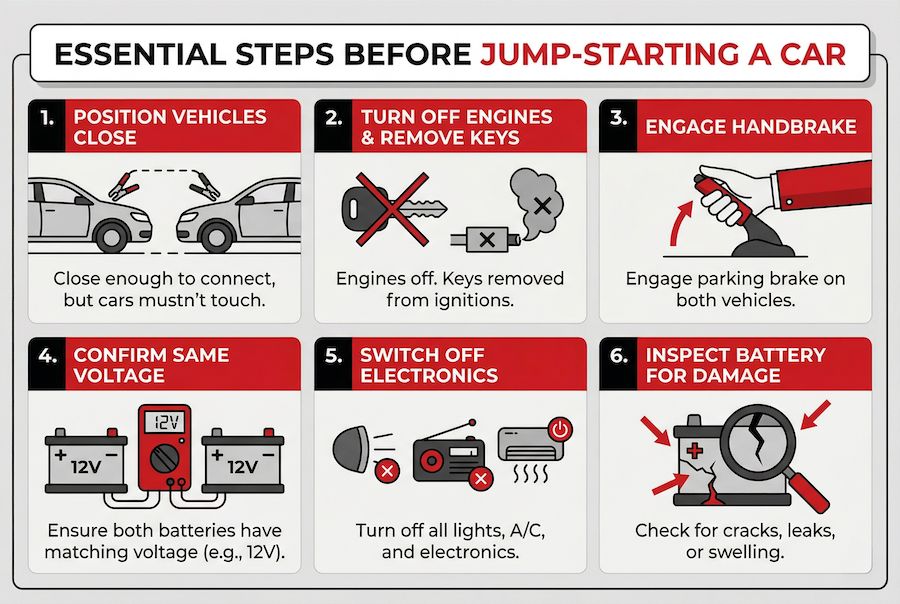
Before you start, it’s important to prepare both vehicles properly to avoid damage or safety risks. Taking a few simple checks can help ensure the jump-start process goes smoothly.
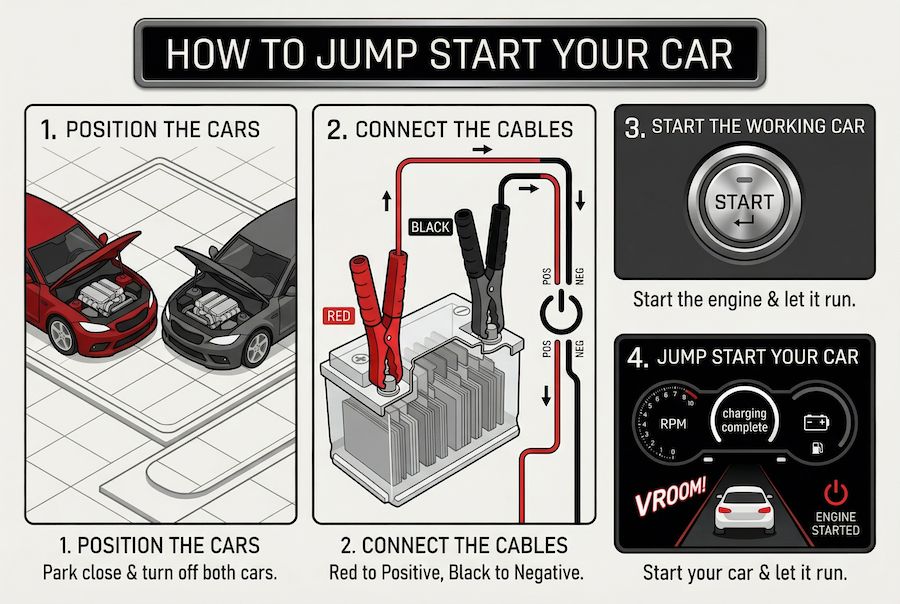
- Position both vehicles close enough for the jumper cables to reach, ensuring they do not touch
- Turn off both engines and remove the keys from the ignition
- Engage the handbrake on both vehicles
- Confirm that both batteries have the same voltage
- Switch off all electronics, including headlights and air conditioning
- Check the battery for visible damage, leaks, or swelling before proceeding
If the battery appears damaged, do not attempt to jump-start a car. Call for assistance instead.
Common Signs of a Dead Car Battery
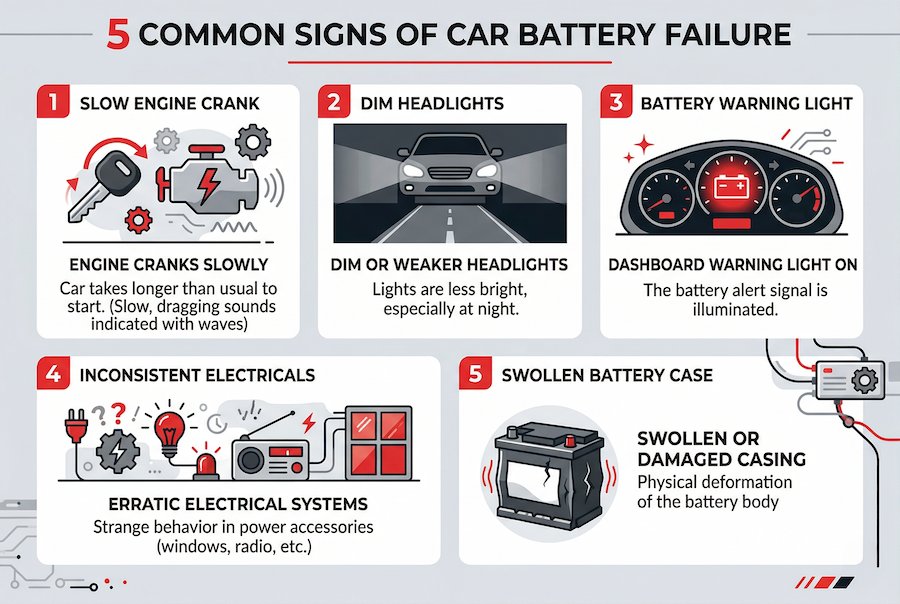
A failing battery often gives you warning signs before it completely stops working. Knowing what to look for can help you avoid getting stranded.
- The engine cranks slowly when you try to start the car
- Headlights appear dim or weaker than usual
- The dashboard battery warning light turns on
- Electrical systems behave inconsistently
- The battery casing looks swollen or damaged
What You Need to Jump-Start a Car
To jump-start a car safely, you will need jumper cables in good condition and a second vehicle with a working battery. Wearing safety gloves and eye protection is also recommended to reduce the risk of injury.
How to Jump-Start a Car (Step-by-Step)
The most important part is following the correct order when connecting cables. This prevents damage and keeps the process safe.
How to Identify Battery Terminals
When learning how to jump-start a car, correctly identifying battery terminals is essential. Connecting jumper cables incorrectly can damage your vehicle.
| Terminal Type | How to Identify It |
|---|---|
| Positive (+) | Marked with “+” or “POS”, often has a red cover |
| Negative (–) | Marked with “–”, usually black and smaller |
How to Use Jumper Cables Correctly
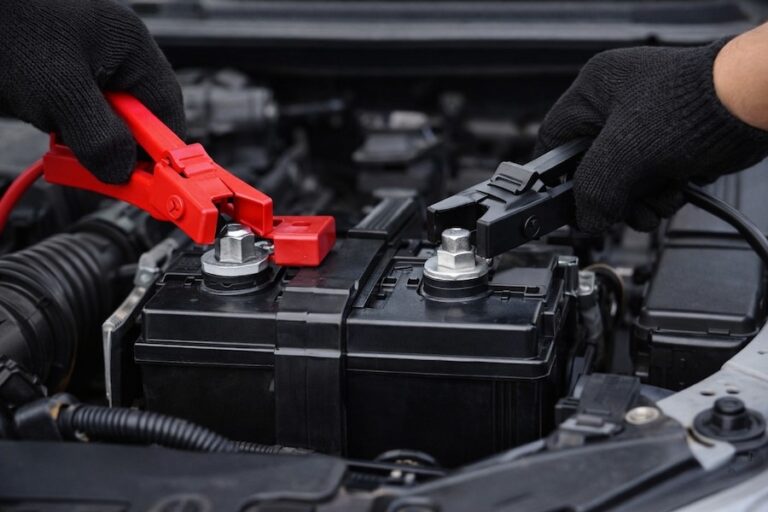
- Connect the red (positive) cable to the positive terminal of the dead car battery
- Connect the other red cable to the positive terminal of the working battery
- Connect the black (negative) cable to the negative terminal of the working battery
- Attach the remaining black cable to an unpainted metal surface on your car (not the battery)
This final connection acts as a grounding point and reduces the risk of sparks.
Starting the Vehicles
Start the working vehicle and let it run for a few minutes. Then try to start your car. If it starts, keep both vehicles running to allow the battery to charge. If it doesn’t start straight away, wait a few minutes and try again.
Disconnecting the Cables Safely
- Remove the black cable from your car
- Remove the black cable from the working battery
- Remove the red cable from the working battery
- Remove the red cable from your battery
Let your engine run for at least 20 minutes to help recharge the battery.
Is It Safe to Jump-Start Modern Cars?
Jump-starting modern vehicles can be more complicated due to advanced electronics. While the process is still possible, there are added risks.
Many newer cars rely on sensitive systems such as engine control units, sensors, and onboard computers. Incorrectly trying to jump-start a car can damage these components.
If you’re unsure, check your owner’s manual or seek professional help. This is often the safest approach.
Electric and Hybrid Vehicles
Most electric vehicles should not be jump-started unless the manufacturer specifically allows it. Charging WA shares that at the heart of EVs is a large high-voltage battery system that requires professionally trained technicians to access.
Hybrid vehicles can usually be jump-started in a similar way to petrol cars. However, you should never attempt to access or interfere with high-voltage battery systems.
Other Ways to Start a Car with a Dead Car Battery
| Method | Description |
|---|---|
| Portable jump starter | A compact device that can start your car without another vehicle |
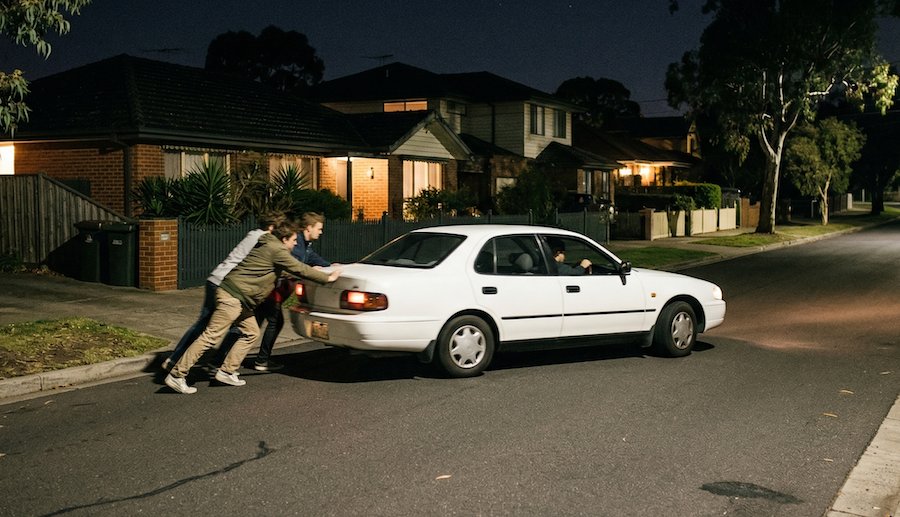
| Push starting | Works for manual cars with assistance and enough space |
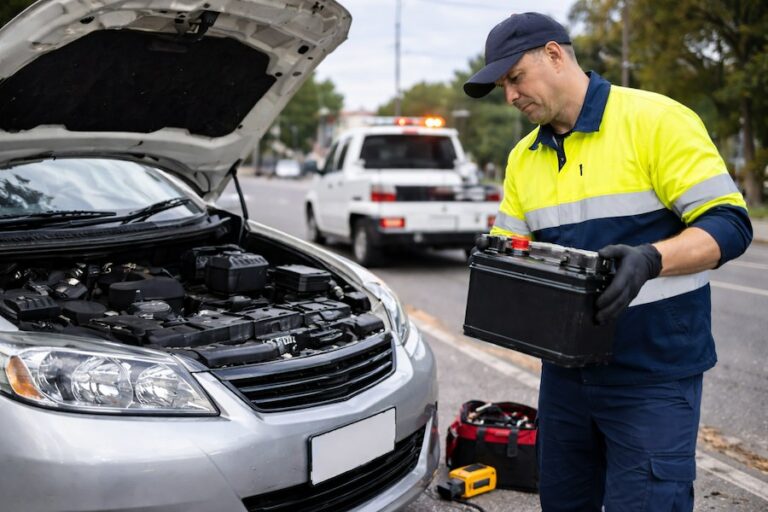
| Roadside assistance | A fast and reliable option if you’re unsure or stuck |
If Your Car Still Won’t Start
If your car still won’t start, wait 5 to 10 minutes before trying again. Double-check that all jumper cable connections are secure and correctly placed. Listen for clicking sounds when turning the key, as this may indicate a completely flat battery or another issue. In some cases, the battery may need replacing, or there may be an underlying mechanical problem, such as a faulty starter motor.
Can You Jump-start a Car with a Broken Starter Motor?
If your starter motor has failed, jump-starting your car usually won’t work. The starter motor is responsible for turning the engine over, so even with a fully charged battery, the engine won’t crank.
In some cases, a faulty starter may work intermittently, but this isn’t reliable or safe. If your vehicle won’t start and you suspect a starter issue, it’s best to seek professional assistance for starter motor replacement to avoid further damage.
What to Do If You’re Stranded
A dead car battery can leave you in a difficult situation, especially on busy Melbourne roads or in unfamiliar areas. Staying calm and following simple steps can help keep you safe.
Practical Safety Steps
- Move your car to a safe location if possible
- Turn on the hazard lights if they are working
- Stay inside your vehicle if you feel unsafe
- Call for roadside assistance
- Share your location with someone you trust
Potential Risks When You Jump-Start a Car
Jump-starting a car carries some risks. Sparks can ignite battery gases and cause fires. Incorrect cable connections may damage your vehicle’s electronics. Battery acid exposure can lead to injury, and wet conditions increase the risk of electrical hazards. Always proceed carefully and prioritise safety. Wearing safety gear like gloves can help prevent electric
When to Call for Professional Help
- Your car does not start after multiple attempts
- The battery is leaking, swollen, or damaged
- You are in a dangerous location
- You are unsure how to use jumper cables safely
Getting Back On the Road
Knowing how to jump-start a car is a practical skill that can save time and reduce stress when dealing with a dead car battery.
By following the correct steps and understanding how to use jumper cables properly, you can safely get your vehicle running again.
If your car still won’t start or you’re unsure at any point, professional help is the safest option. Our Melbourne towing team is available 24/7 to provide fast, reliable roadside assistance whenever you need it.